Why people avoid primary care—and how employers can change that

New research from more than 1,800 Americans reveals the barriers preventing people from engaging with primary care—and what organizations can do to improve access, outcomes, and costs.

Primary care plays a critical role in keeping people healthy and preventing costly medical issues. Yet many people struggle to use primary care consistently due to barriers built into the healthcare system today.

This research explores insights from more than 1,800 Americans to uncover what stands between people and primary care. The findings reveal three major barriers—cost, convenience, and commitment—and provide a clearer picture of how organizations can remove these obstacles to improve workforce health and reduce long-term healthcare costs.
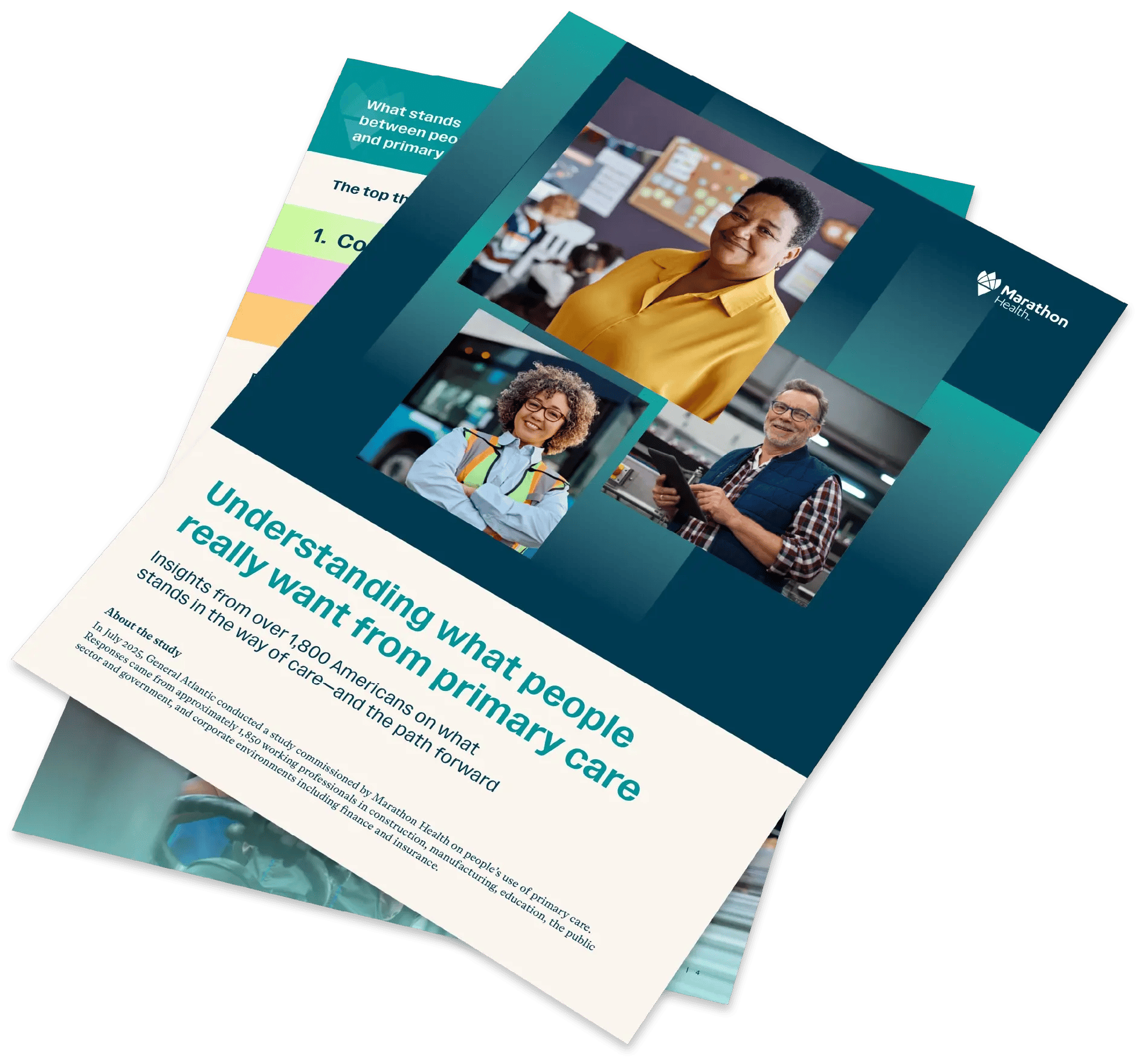
  • The top barriers preventing people from engaging with primary care
  • Why cost and convenience drive healthcare decisions
  • How trust and patient-provider relationships influence care utilization
  • Why stronger primary care engagement improves outcomes and lowers costs
  • What organizations can do to make primary care more accessible and effective
Download eBook
The State of Primary Care in America [2025] | Research sneak peek

For more than 50 years, research has shown that strong primary care leads to better clinical outcomes, less unnecessary utilization, and lower costs.

— Dr. Nirav Vakharia, Chief Operating Officer, Marathon Health

Download eBook

Access the research to understand what people really want from primary care—and how organizations can remove barriers to improve health outcomes and reduce healthcare costs.