See how Michigan employers are closing the healthcare gap
Fill out the form to access insights on Michigan’s healthcare challenges—and how employers nationwide are driving better outcomes with advanced primary care.

Across Michigan, traditional healthcare models are becoming harder to rely on. Employees face long wait times, delayed care, and higher out-of-pocket costs, while employers see the downstream impact in absenteeism, productivity loss, and unpredictable claims.
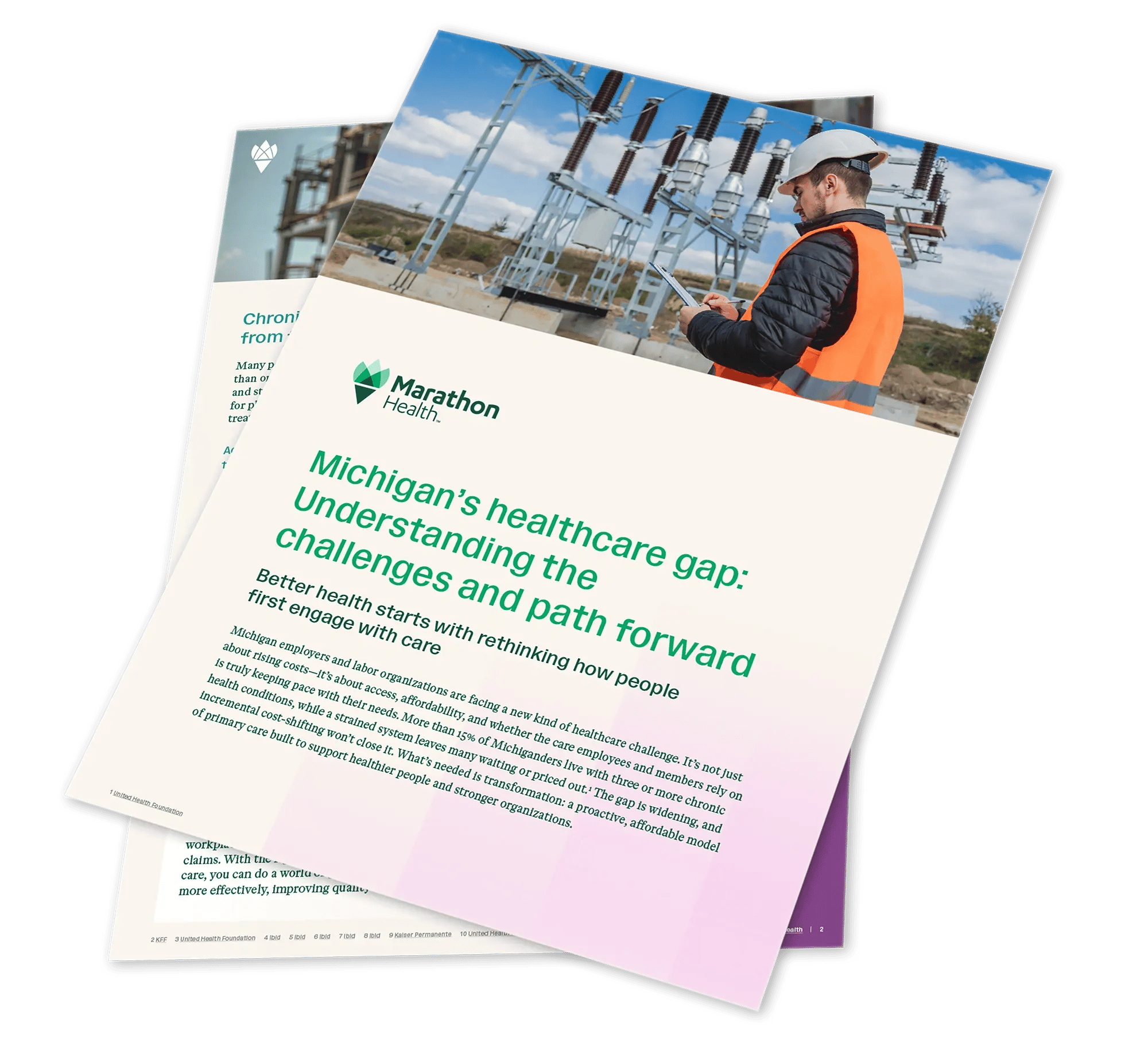
This report breaks down the pressures affecting organizations statewide—and shows how advanced primary care is helping restore timely access, strengthen preventive care, and reduce avoidable high-cost utilization. By focusing on relationships, continuity, and proactive support, employers are improving health outcomes while creating more stable healthcare spend.

More than 15% of Michiganders live with multiple chronic conditions, from obesity (36.1%) to high blood pressure (37%), adding to an already strained care system.

65% of Michiganders are delaying or skipping care because it’s too expensive, while 76% worry about future expenses as medical costs climb faster than in many other states.

Nearly 2.6 million Michiganders live in federally designated Primary Care Health Professional Shortage Areas (HPSAs)—leaving many residents without timely support.